
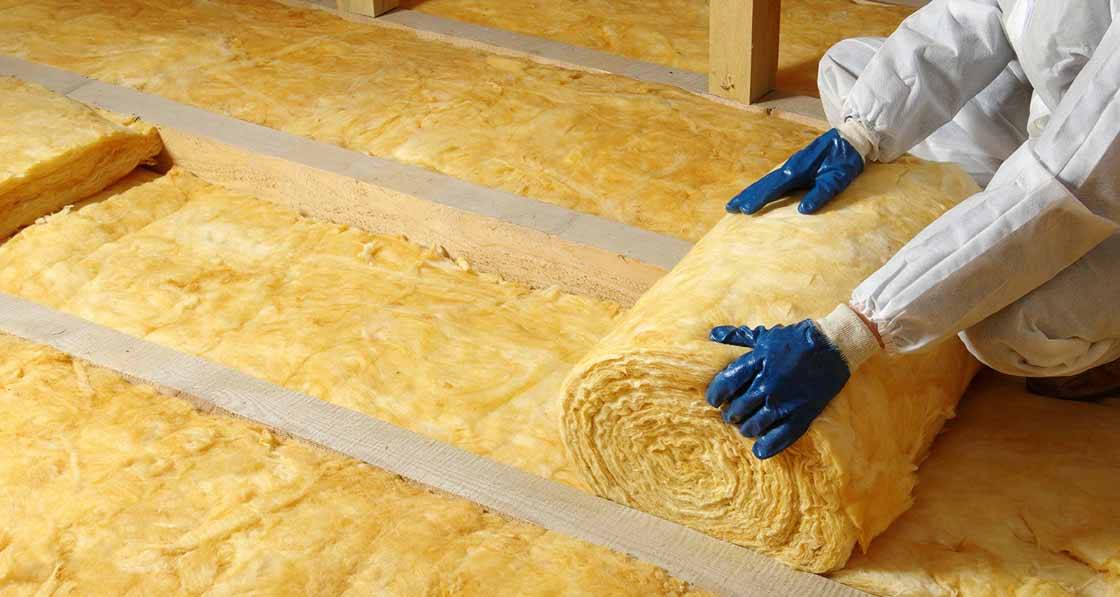

- Insulation
- Posted
Widespread insulation failures found in EU tests
Want immediate access to all back issues of Passive House Plus and exclusive extra content? Click here to subscribe for as little as €20, or click here to receive the next issue free of charge
The tests were carried out by market surveillance authorities from 14 countries as part of the EU-funded 2025 Joint Actions on Compliance of Products campaign, which aims to check that products on sale match their declared performance and to protect consumers and reputable businesses from rivals whose goods fall short.
Of ninety-seven samples tested for thermal resistance, 31 (32 per cent) did not meet requirements. Tests measured thermal conductivity and thickness, both of which determine how well a building retains heat in winter and stays cool in summer. In most failures the measured performance differed from the declared value, while a smaller number of products also fell short on thickness.
The testing, which formed part of the 2025 Joint Actions on Compliance of Products campaign across EU and EFTA countries, looked at a total of 106 samples of six commonly used materials: expanded and extruded polystyrene, mineral wool, cellular glass, wood wool and wood fibre.
Products were bought in Austria, Belgium, Denmark, Finland, Germany, Greece, Ireland, Italy, Latvia, Malta, Norway, Poland, Portugal and Sweden, from shops, online and directly from manufacturers.
Fire concerns
Reaction-to-fire tests on eighty-one samples found that 11 (14 per cent) did not meet their declared class. Eight of the 52 products declared as class E failed, a rate of 15 per cent. Class E products are combustible but should still pass a basic test showing that a small flame does not spread too far across them within a set time.
Both products declared as class A2, which are classed as non-combustible but may make a very limited contribution to fire under certain conditions, failed. One of twenty-one class A1 products, also considered non-combustible, failed too. None of the six products declared as classes B to D failed.
The failures suggest some products could ignite or let flames spread faster than their declared class implies. The level of risk depends on where and how the insulation is installed.
Markings and documentation were also checked, with 64 per cent of samples failing to meet requirements, mainly because of an incomplete or missing declaration of performance or CE marking.
Authorities classed two samples as high risk and four as serious risk, with the findings mainly related to fire performance not corresponding to the declared class. One product was banned from sale and seven were withdrawn from the market. Many businesses agreed to resolve conformity defects, and the results were shared with other member states.
Advice for buyers and suppliers
Consumers should look for the CE marking and a declaration of performance, check that a product suits its intended use and complies with national building requirements, and follow the manufacturer’s installation instructions, since even a compliant product may fail to deliver the expected energy-saving and safety benefits if installed incorrectly. The European Commission’s Safety Gate rapid alert system is a good place to check for dangerous products.
Manufacturers and other economic operators should ensure declared thermal values accurately reflect product performance, keep documentation, CE markings and declarations of performance complete and up to date, and maintain robust factory production controls, regular testing and traceability, particularly when raw materials, suppliers or production processes change. They should also provide clear installation instructions in the language of the country of sale.
Vanessa Capurso, policy officer at the European Commission’s directorate-general for internal market, industry, entrepreneurship and SMEs, said: “Market surveillance campaigns help protect consumers and ensure that reputable businesses are not undercut by competitors whose products do not meet their declared performance levels.”
Passive House Plus has reached out to the commission for more details.
Related items
-
 Kingspan fined €40 million by EU
 -
 Households feeling the heat of global oil conflict
 -
 New and enhanced Irish retrofit grants go live on 6 October
 -
 Campaigners tell Irish government to publish Climate Action Plan
 -
 Central Bank: Irish housing completions set to fall as housing crisis continues
 -
 Armacell quantifies emissions avoided by insulation