
Households feeling the heat of global oil conflict
Residential heat pump sales have risen this year, with an eleven per cent rise in the first six months of the year against the same period in 2025.

Residential heat pump sales have risen this year, with an eleven per cent rise in the first six months of the year against the same period in 2025.
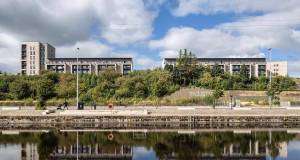
If attempting to tackle a housing crisis is hard, how about doing so while taking on the climate crisis, energy crisis, cost-of-living crisis and pandemic all at once, with a sprinkle of Brexit? One pioneering Scottish project shows that with a little resolve, adversity can lead to triumph.

How can period properties be made fit for the demands of the 21st century, without pushing the building too far? One University of Cambridge retrofit project may have the answer, harnessing multidisciplinary expertise to balance energy, moisture and space constraints.
Additional reporting by Jeff Colley.
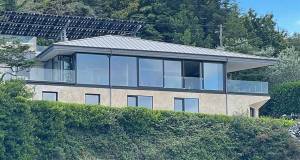
Contrary to popular belief, passive house isn’t about maximisation of passive solar gains. It’s about optimisation, balancing free winter heat with avoiding summer overheating. But on a site that seemed hellbent on denying sunlight, every last ray has been stolen to somehow deliver not just a passive house, but a net zero energy home.
Additional reporting: Jeff Colley
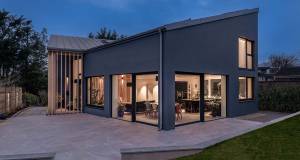
An Edinburgh-steeped couple wanted Georgian grandeur in a Cork city infill. Their architect obliged, wrapping double-height spaces and oversized glazing in a climate-responsive envelope that shrugs off Irish winters. Additional reporting: Jeff Colley

Gordon Bunshaft's Banque Lambert has presided over Boulevard Marnix since 1964, a listed modernist landmark facing the King's Palace, its celebrated precast concrete exoskeleton as distinctive today as the day it was built.
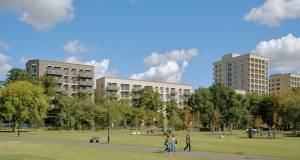
The myth that energy-efficient building is a needless luxury has been dealt a significant blow by new research published by the UK’s Passivhaus Trust.

Building envelope specialists and energy systems experts will meet in Manchester in September as the AECB's annual conference tackles one of the most contested questions in low-energy construction: how fabric performance and energy supply should work together.

The EU is set to publish plans to reform how electricity and gas are priced – to drive the widespread uptake of heat pumps and cut heating bills by up to 60 per cent.

World-renowned green building writer Lloyd Alter spills the beans on the first ever combined UK and Ireland passive house conference in Belfast.
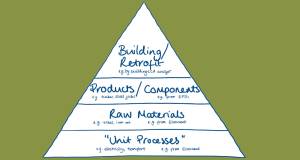
Life cycle assessments are crucial for sustainable building design, but understanding their inherent limitations is key to making better decisions with imperfect data, writes Dr Lois Hurst.

An award-winning retrofit demonstrates that universal design and ultra-low energy performance are powerful allies, not competing priorities.
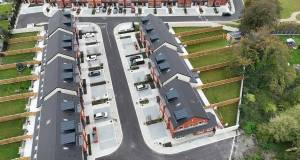
With 35,000 homes under their belt, one of the UK and Ireland's most prolific developers has just completed its first passive house scheme - aided by an innovative airtightness approach.
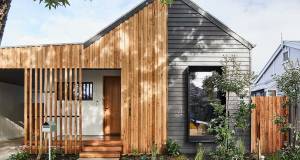
Big Picture - Forrest Passive House in Spotswood achieves certification while maintaining contemporary family functionality through thoughtful material choices and spatial planning.
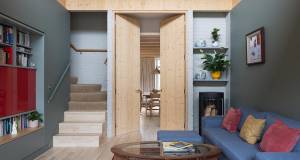
An architect’s four-year quest to build his family home on a Dublin laneway demonstrates how mass timber can maximize space and character in the tightest urban sites – with award-winning results, and fascinating performance insights.
Additional reporting by Jeff Colley
The Association for Environment Conscious Building (AECB) is recruiting an executive director in what the organisation describes as a rare opportunity to shape the future of sustainable construction in the UK
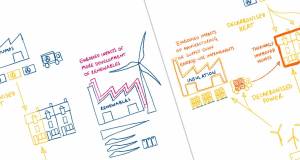
With an increasing emphasis on the electrification of heat as the electricity grid decarbonises, interest in reducing the embodied carbon of buildings is growing. But does a focus on embodied carbon alone risk giving needlessly energy intensive ways of making buildings a free pass? In the first of a new series of articles, Dr Lois Hurst journeys into understanding embodied and life cycle impacts in construction.
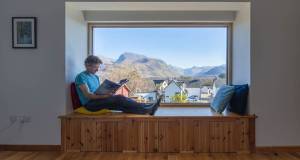
From frozen tea to thermal bliss: energy specialist Esmond Tresidder transformed his leaky 1970s Highland home into one of the highest performing retrofits ever featured in these pages, combining academic knowledge with hands-on retrofit innovation to create a comfortable, healthy family haven with breathtaking views of Ben Nevis, proving that even Scotland’s most challenging climates are no match for passive house principles.

Through passion, patience, and architectural expertise, a 16th century Carmel-ite friar’s cottage in Kinsale, owned by Passive House Plus columnist Dr Marc Ó Riain, has achieved what many thought impossible— an A1 energy rating for a Tudor-era building. But not without challenges.
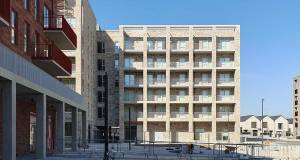
Ireland's largest passive house development to date, Shanganagh Castle, is proof that with proper planning and collaboration, delivering high density housing doesn’t mean compromising on quality or climate action – without increasing costs or causing delays.
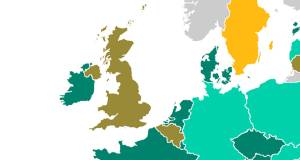
As electricity decarbonises, the case for switching from fossil fuel boilers to efficient use of electricity to heat buildings via heat pumps has become overwhelming. But in markets like the UK where electricity is far more expensive than the European average, and people on low incomes may be chronically underheating poorly insulated homes, could a drive to electrify heating exacerbate energy poverty?
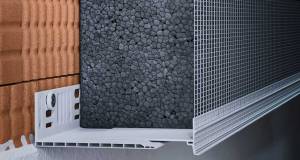
A thermal bridging issue that has long plagued external wall insulation systems at building base levels could be costing homeowners the equivalent of 25 mm of insulation thickness, according to new independent testing.
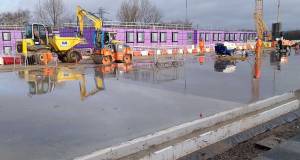
Build Homes Better has secured an updated KIWA Agrément certificate for its Isoquick insulated foundation system, adding a brick support detail that solves a critical structural requirement set by leading warranty providers including the National House Building Council (NHBC).
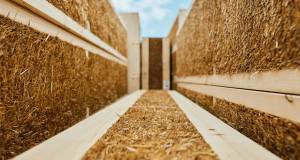
In recent years, the drive to reduce the embodied carbon of buildings has led to a resurgent interest in timber and other biobased building materials. But peering into the future, if we are to think not just about carbon but also land, water, and regenerating nature, how might we build to meet our essential needs, and what might we build with?
By Lenny Antonelli and Andy Simmonds
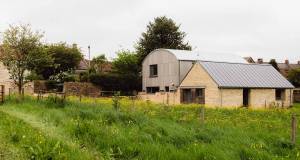
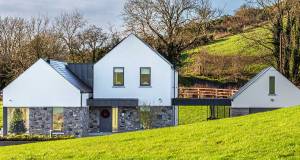
Five years ago, a fabric first trailblazer took a dose of his own medicine – and delivered a family home that combines climate action, comfort, cost-effectiveness and resilience in the face of a record-breaking storm.

As global temperatures soar, an Irish organisation is bringing experts together this month for a summit on the future of sustainable construction.


It’s a radical idea: that to negate the environmental damage of construction, we don’t just need to build sustainably, we need to build less. However, most architects and building designers earn a living by doing exactly the opposite: by building stuff. So how can the design practice be reinvented for a world in which we need to do more with much, much less?
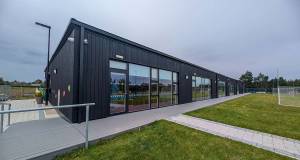
Forgive the 80s hip hop house reference in the headline, but the volume of the walls in this volumetric modular school building in Birr was literally pumped up – with recycled newspaper insulation. Built to passive house principles, it’s a story of one Roscommon manufacturer reimagining the role that offsite methods can play in the delivery of highly sustainable permanent accommodation for schools – while delivering exceptionally low embodied carbon results. Additional words - Jeff Colley