From the Construct Ireland archives


Welcome to the archive of Construct Ireland, the award-winning Irish green building magazine which spawned Passive House Plus. The feature articles in these archives span from 2003 to 2011, including case studies on hundreds of Irish sustainable buildings and dozens of investigative pieces on everything from green design and building methods, to the economic arguments for low energy construction. While these articles appeared in an Irish publication, the vast majority of the content is relevant to our new audience in the UK and further afield. That said, readers from some regions should take care when reading some of the design advice - lots of south facing glazing in New Zealand may not be the wisest choice, for instance. Dip in, and enjoy!

Passive Resistance

0209passivetitle.jpg
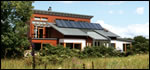
On Tuesday the 15th of March a passive house, a house that does not need to be heated, was built a few miles outside of Galway. The brain child of Lars Pettersson of Galway based Scandinavian Homes Ltd, it is believed to be the world’s first standardized and factory made passive house.
Terra incognita

Much hope has been pinned on the development of new technologies for sinking carbon and generating low impact energy
Much hope has been pinned on the development of new technologies for sinking carbon and generating low impact energy. Richard Douthwaite reveals the major contribution that could be offered by something very old; a soil type that has been in use for 6,000 years.

True to Form

0305-lowenergyICFtitle.jpg
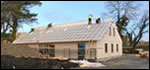
Adding to the list of developers aiming to deliver energy efficient housing, Cronan Nagle Construction are currently on site with 188 highly insulated, airtight homes in Ennis, co. Clare. The development, which also incorporates heat recovery ventilation and condensing gas boilers is surpassing the thermal requirements of Building Regulations by up to 45%, as John Hearne discovers.

Dream factory

Dream Factory
The rapid emergence of sustainable building in Ireland has been heavily influenced by the techniques of early-adopters extending from Scandinavia, to Canada, to Germany and Austria. John Hearne visited a recently completed timber home in Galway which uses Austrian know-how to couple air-tightness, high levels of insulation and healthy materials with a sustainable approach to heating and ventilation

Modern Art

KILLINEY HOMES CONNECT MODERNISM WITH SUSTAINABILITY
Killiney is an area known for both its natural beauty and the desirability of the existing built environment. Jason Walsh visited two new houses in the exclusive south County Dublin village which show it as being at the forefront of the drive to create a lasting beauty.

Access All Areas

0204disacctitle.jpg
A little foresight at the design stage can go a long way in determining a building’s success. If a building’s design fails to take into consideration the needs of any potential occupants and users, the risk of the need for corrective work, often at considerable cost, is greatly increased.
Construct Ireland’s Architecture Correspondent Lauren Kapusta reports

Cutting Edge

Cliffs of Moher Visitor Centre
Building a visitor centre at such an evocative site as the Cliffs of Moher, one of Ireland’s greatest tourist attractions must have been something of a challenge. By attempting to cater for visitors, the centre could so easily have ruined the rugged, barren landscape which makes people visit in the first place. John Hearne visited the new interpretive centre to discover a building which addresses this problem by becoming part of the landscape, whilst using eco technologies to reduce the building’s strain on the broader environment.

Local custom

Local custom
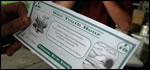
With money leaving local economies across Ireland to service debt and significant drops in local authority revenues, towns such as Dundalk, Ennis and Kilkenny are investigating the possibility of bringing in electronic currencies to keep money circulating locally, as Richard Douthwaite reveals.

Navan Credit Union

Architect Paul Leech explains why the new Navan Credit Union is arguably Ireland’s most innovative sustainable building to date, and outlines his hopes that the experience gained from this project can help the construction industry to realise sustainable building in Ireland.

The Potential of Renewable Energy

Bernd Reinhard, Deputy Executive Director of the GICIC outlines the potential that fast emerging renewable technologies possess to revolutionise Ireland’s energy supply, from wind power’s capacity on a national level, to the benefits the likes of solar and geothermal can offer proactive homeowners
The German-Irish Chamber of Industry and Commerce (GICIC) has just completed a study titled “The Potential of Renewable Energy in Ireland”.
Based on the study’s findings, Bernd Reinhard, Deputy Executive Director of the GICIC outlines the potential that fast emerging renewable technologies possess to revolutionise Ireland’s energy supply, from wind power’s capacity on a national level, to the benefits the likes of solar and geothermal can offer proactive homeowners