
From the Construct Ireland archives


Welcome to the archive of Construct Ireland, the award-winning Irish green building magazine which spawned Passive House Plus. The feature articles in these archives span from 2003 to 2011, including case studies on hundreds of Irish sustainable buildings and dozens of investigative pieces on everything from green design and building methods, to the economic arguments for low energy construction. While these articles appeared in an Irish publication, the vast majority of the content is relevant to our new audience in the UK and further afield. That said, readers from some regions should take care when reading some of the design advice - lots of south facing glazing in New Zealand may not be the wisest choice, for instance. Dip in, and enjoy!

DEAP impact

0302-deapimpacttitle.jpg
At the start of July a key event in the Irish construction industry passed almost entirely unnoticed, with the requirement that the brand new Dwelling Energy Assessment Procedure (DEAP) calculation software be used for all planning applications for new homes with immediate effect. The new tool will be used to calculate Building Energy Ratings (BER) under the requirements of the Energy Performance of Buildings Directive (EPBD). Patrick Daly, lecturer in Environmental Design in the School of Architecture at DIT Bolton St. reveals his view on DEAP and its impact on the industry.
International selection: Passive house comes of age

International Selection
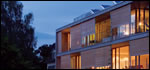
Box-like, small windows, primary colour renders - there is a common misconception that building to the passive house standard involves sacrificing design freedom for the sake of thermal performance. Not so, argues passive house guru Tomás O’Leary of MosArt and the Irish Passive House Academy, as his selection of architecturally diverse buildings reveals.

Staying Power

Biomass, CHP, District Heating
Responding to the Department of Communications, Marine & Natural Resources’ Green Paper “Towards a Sustainable Energy Future for Ireland”, Mark Coyne, Technical Director of Dalkia Ireland, outlines the challenges and responses to the three main pillars of the Green Paper – sustainability, competitiveness and security of supply.

Breaking the Bank

Richard Douthwaite on the perils facing Irish Banks
With banks in America and the UK encountering major difficulties as previously booming economies head towards recession, a similar and perhaps even worse fate may be awaiting Irish banks. Worryingly, the situation is shaping up to be so bad, that the very future of the banks may be under threat, as Richard Douthwaite explains.

Taking control

Taking Control
Buildings that are designed or refurbished to use little energy all too often fail to deliver the expected performance, if the building occupants aren’t able to use the building as intended. John Hearne reveals the crucial role that user-friendly heating controls play in ensuring that a theoretically low energy building delivers the expected results.

Retrofit: Top tips

Top Tips
As the en masse energy upgrading of Irish homes and other buildings takes-off on an unprecedented scale, there are real dangers that even conscientious clients, professionals and contractors will make decisions that fail to save energy and create unhealthy buildings. Pioneering green architect Joseph Little, draws from the research and experience of his architectural practice & Building Life Consultancy to offer advice that should be heeded before any energy upgrade.

Mixed Signals

As it nears completion, John Hearne visits what is anticipated to be one of the lowest energy buildings in Ireland's recent history.

The Sun in Action

The Sun in Action by Paul Dykes, Marketing Manager of Sustainable Energy Ireland.

EPA HQ

EPA HQEPA HQ
A new extension to the EPA's headquarters in Wexford lives up to the organisation's aim of environmental protection, boasting passive ventilation and lighting, a host of green technologies and a sustainable approach to landscaping.