Courting Sustainability
The development of Coppinger Court, a high density apartment complex on Popes Quay, Cork City, has been broadly received with a warm response, picking up awards in 2004 including the RIAI Best Sustainable Building award.

Welcome to the archive of Construct Ireland, the award-winning Irish green building magazine which spawned Passive House Plus.
The feature articles in these archives span from 2003 to 2011, including case studies on hundreds of Irish sustainable buildings and dozens of investigative pieces on everything from green design and building methods, to the economic arguments for low energy construction.
While these articles appeared in an Irish publication, the vast majority of the content is relevant to our new audience in the UK and further afield. That said, readers from some regions should take care when reading some of the design advice - lots of south facing glazing in New Zealand may not be the wisest choice, for instance.
Dip in, and enjoy!
The development of Coppinger Court, a high density apartment complex on Popes Quay, Cork City, has been broadly received with a warm response, picking up awards in 2004 including the RIAI Best Sustainable Building award.
With money leaving local economies across Ireland to service debt and significant drops in local authority revenues, towns such as Dundalk, Ennis and Kilkenny are investigating the possibility of bringing in electronic currencies to keep money circulating locally, as Richard Douthwaite reveals.
The development of sustainable building in Ireland has had to wait for the public to become concerned about energy supply, climate change, and the implications of living in draughty, damp buildings. Much of the established low energy know-how emanates from countries where cold winters drove innovation. Drawing from 50 years of research and development between the Canadian government and housing industry, the Super E programme may be just what Ireland needs, as John Hearne discovered at a new development in Rosslare.

Construct Ireland spoke to the six newest approved ÉASCA members, companies involved in everything from eco-friendly timber frame
homes and natural insulation, to energy rating, eco friendly cement and a variety of other sustainable building products.
With great attention to energy, materials and water, ABK Architects’ new civic precinct shows that smart green design can show no sign of compromise
Construct Ireland’s Jason Walsh visited the Brooklodge in Macreddin, County Wicklow, to find out about how one hotel has found rising fossil fuel costs the perfect reason to invest in a sustainable future.
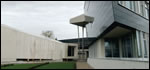
As long term readers of Construct Ireland will recall, the mainstreaming in recent years of sustainable design and construction has been exemplified in many innovative local authority offices. John Hearne visited Aras Contae an Chláir, and discovered a building which attempts to holistically minimise environmental impact, with attention paid to more than just energy performance and carbon emissions.

Since establishing UCD’s Energy Research Group in 1975, the career of Professor J Owen Lewis has taken in the role of principal at the UCD College of Engineering, Mathematical and Physical Sciences, a Bord na Móna R&D directorship and expert roles advising EU research, national energy policy and building regulations. Appointed CEO of SEAI last year, Professor Lewis has been a champion of sustainable building since before the term existed. His selection combines a proto-green Alvar Aalto design, the reimagined Reichstag and an unusual academic building with two new cutting edge sustainable buildings.
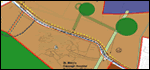
As policy makers start to set mandatory low energy and renewable energy requirements as conditions of planning, the ability of the construction industry to find sound low-cost ways of achieving the new standards is becoming a key factor. John Corless speaks to leading sustainable building consultant Jay Stuart of Delap & Waller EcoCo and Paul Gilmartin of Ecobead to discover an approach with enormous potential for en-masse usage.

Ireland ’s reliance on fossil fuel sources for electricity generation places the whole country on unstable ground as these limited resources dwindle