Back to the Future
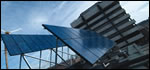
Jason Walsh visited the Green Building, a pioneering sustainable development built in Dublin's Temple Bar in 1994, to find out how one of Ireland’s most ground breaking eco designs has been performing over the last decade.

Welcome to the archive of Construct Ireland, the award-winning Irish green building magazine which spawned Passive House Plus.
The feature articles in these archives span from 2003 to 2011, including case studies on hundreds of Irish sustainable buildings and dozens of investigative pieces on everything from green design and building methods, to the economic arguments for low energy construction.
While these articles appeared in an Irish publication, the vast majority of the content is relevant to our new audience in the UK and further afield. That said, readers from some regions should take care when reading some of the design advice - lots of south facing glazing in New Zealand may not be the wisest choice, for instance.
Dip in, and enjoy!
Jason Walsh visited the Green Building, a pioneering sustainable development built in Dublin's Temple Bar in 1994, to find out how one of Ireland’s most ground breaking eco designs has been performing over the last decade.
External insulation examined: the reasons why placing insulation outside makes most sense, with six example projects
Commercial, industrial and institutional buildings use a great deal of energy to ensure the comfort of the occupants and the efficient operation of their businesses. Building Energy Management Systems (BEMS) enable building owners to use this energy efficiently, as Sustainable Energy Ireland’s Chris Hughes explains
Much of the housing built around Dublin over the last forty years has been built of single-leaf nine-inch hollow block construction – which are both notoriously energy inefficient and extremely difficult to insulate effectively without causing damp problems. Lenny Antonelli visited a hollow block house which has been ecologically renovated to protect occupant health whilst shooting to the top of the energy rating scale.
Imagine moving into a house without a heating system – what would you do? Contact the developer and demand they put one in immediately? Call a solicitor and sue the builder? Or sit back and enjoy living in a house, designed to meet your expectations of comfort without any recourse to a space heating system. Jason Walsh met the people behind Ireland’s drive toward the passive house.
Planning ahead for Ireland’s electricity supply is by no means a simple matter, given the range of unprecedented issues that are coming to the fore. Massive cuts in emissions must be achieved, whilst decisive action is required to ensure adequate supply of electricity at a time when usage is spiraling. Richard Douthwaite explains the balance that Ireland must achieve between efficient local generation and usage and ensuring optimal interconnection to global renewable electricity supply
Killiney is an area known for both its natural beauty and the desirability of the existing built environment. Jason Walsh visited two new houses in the exclusive south County Dublin village which show it as being at the forefront of the drive to create a lasting beauty.
In the future, the high cost and scarcity of fossil energy may force a shift towards retaining and modernising old buildings, thereby avoiding the use of huge amounts of energy to manufacture building materials. John Hearne visited the Belvedere Orphanage, a group of 19th century dwellings whose low energy refurbishment may offer a template for development in the future, by using wood pellet district heating and a host of energy saving measures whilst nonetheless paying great attention to preserving the buildings’ heritage value.