Opinion - Is passive house going mainstream?

Archie O’Donnell, projects coordinator for Éasca and the Irish Passive House Association

Welcome to the archive of Construct Ireland, the award-winning Irish green building magazine which spawned Passive House Plus.
The feature articles in these archives span from 2003 to 2011, including case studies on hundreds of Irish sustainable buildings and dozens of investigative pieces on everything from green design and building methods, to the economic arguments for low energy construction.
While these articles appeared in an Irish publication, the vast majority of the content is relevant to our new audience in the UK and further afield. That said, readers from some regions should take care when reading some of the design advice - lots of south facing glazing in New Zealand may not be the wisest choice, for instance.
Dip in, and enjoy!
Archie O’Donnell, projects coordinator for Éasca and the Irish Passive House Association
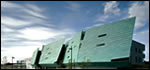
The striking Galway Mayo Institute of Technology(GMIT) Learning Resource Centre was recently recognized with the 2005 President’s Award for Innovation in Design presented by the Association of Consulting Engineers of Ireland (ACEI) to Varming Mulcahy Reilly Associates Consulting Engineers
Built on stilts, entirely encased in recycled newspaper insulation on all sides, and designed to be easily taken apart so that its constituent elements can be reused once it reaches its end of life, Portlaoise Locomotive Drivers Building could hardly be more green. But it is – it’s a certified passive house. Iarnród Éireann senior architect David Hughes explains how such a sustainable exemplar came to be.
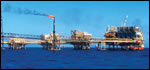
World record oil prices are being shattered so regularly that breaking news stories on the matter seem cliché, with other fossil energy sources heading in the same direction. Richard Douthwaite describes the first significant signs that Irish banks may be starting to take the issue on board regarding property lending.
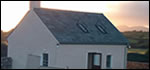
Of huge importance to our national identity and one of the major features of the rural Irish countryside are the derelict small cottages, scattered across the land, that have long fallen into ruin. Often situated in Irelands most beautiful and remote areas, Terry Cunningham, Rural Enterprise Adviser of the Southern Tipperary office of Teagasc sought to revitalise and fully utilise these charming and unique dwellings from our past.

Fingal County Council have clearly shown a laudable commitment to innovation by introducing a mandatory planning requirement for seven areas that all new developments reduce energy use and C02 emissions relating to space & water heating to 60% below Building Regulations requirements, with 30% of space & water heating coming from renewable energy sources
Responding to the Department of Communications, Marine & Natural Resources’ Green Paper “Towards a Sustainable Energy Future for Ireland”, Mark Coyne, Technical Director of Dalkia Ireland, outlines the challenges and responses to the three main pillars of the Green Paper – sustainability, competitiveness and security of supply.
During his tenure as energy minister Eamon Ryan instigated plans to energy upgrade Ireland’s draughty, damp housing stock. Ryan and his wife, writer Victoria White, show Construct Ireland how their own home has been given the green treatment, and architect Mike Haslam of Solearth describes the project.
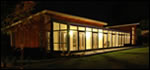
Recently sold by private tender for over e1.3 million, the ECO House in Shankill, Co. Dublin exceeded auctioneers expectations, an indicative example of the shift from public curiosity to eagerness to invest in contemporary sustainable building.