From the Construct Ireland archives


Welcome to the archive of Construct Ireland, the award-winning Irish green building magazine which spawned Passive House Plus. The feature articles in these archives span from 2003 to 2011, including case studies on hundreds of Irish sustainable buildings and dozens of investigative pieces on everything from green design and building methods, to the economic arguments for low energy construction. While these articles appeared in an Irish publication, the vast majority of the content is relevant to our new audience in the UK and further afield. That said, readers from some regions should take care when reading some of the design advice - lots of south facing glazing in New Zealand may not be the wisest choice, for instance. Dip in, and enjoy!

Hollow victory

Hollow Victory
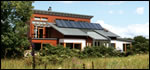
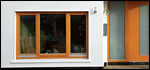
Much of the housing built around Dublin over the last forty years has been built of single-leaf nine-inch hollow block construction – which are both notoriously energy inefficient and extremely difficult to insulate effectively without causing damp problems. Lenny Antonelli visited a hollow block house which has been ecologically renovated to protect occupant health whilst shooting to the top of the energy rating scale.
Solar Decathlon

Solar Decathlon
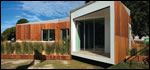
Lenny Antonelli takes a look at some of the entrants of the 2009 Solar Decathlon, a competition that challenges university teams from around the world to design and build homes that capture the sun’s energy.

BEMS - Building Energy Management Systems

0205bemstitle.jpg
Commercial, industrial and institutional buildings use a great deal of energy to ensure the comfort of the occupants and the efficient operation of their businesses. Building Energy Management Systems (BEMS) enable building owners to use this energy efficiently, as Sustainable Energy Ireland’s Chris Hughes explains

Terra incognita

Much hope has been pinned on the development of new technologies for sinking carbon and generating low impact energy
Much hope has been pinned on the development of new technologies for sinking carbon and generating low impact energy. Richard Douthwaite reveals the major contribution that could be offered by something very old; a soil type that has been in use for 6,000 years.

Winning Combination

0311-WinningCombinationTITLE.jpg
A new development in the historic town of Thomastown, County Kilkenny brings the cutting edge of green innovation into a setting known for its medieval heritage. John Hearne visited the site, where a commitment to the environment is evident in sustainable design combined with everything from airtight detailing to technologies such as factory insulated timber frame, low energy windows, solar thermal, photovoltaic and heat recovery ventilation

Enerphit: the passive house approach to deep retrofit

While the principles of low energy building apply equally for new build and upgrades, the reality is that htting passive levels becomes much trickier when retrofitting. The Passive House Institute have taken this on board and created a retrofit standard that is ambitious but achievable.

The Lay of the land

0309-layofthelandTITLE.jpg
The unprecedented development seen in Ireland in the Celtic Tiger years was fueled by the availability of cheap, abundant fossil energy. As the boom ends, the state is attempting to boost the economy with investment in larger than ever infrastructural projects which will not benefit many of the tax payers who are funding them, and crucially don’t recognize the extent to which peak oil production will affect their viability, as Richard Douthwaite reveals.

Caveat Emptor

0208caveattitle.jpg
Construct Ireland Journalist Frank Coles investigates the impact posed by the Energy Performance of Buildings Directive

Dream factory

Dream Factory
The rapid emergence of sustainable building in Ireland has been heavily influenced by the techniques of early-adopters extending from Scandinavia, to Canada, to Germany and Austria. John Hearne visited a recently completed timber home in Galway which uses Austrian know-how to couple air-tightness, high levels of insulation and healthy materials with a sustainable approach to heating and ventilation